In a smartphone market dominated by aggressive marketing, flashy features, and incremental upgrades, it’s rare for a device to genuinely surprise people. Yet that’s exactly what the Motorola Signature seems to have done. For years, Motorola has quietly operated in the background—reliable, practical, but rarely headline-grabbing. It played mostly in the midrange segment, focusing on balance rather than dominance.
But with the Motorola Signature, something has clearly shifted.
This isn’t just another phone. It’s a statement.
And more importantly, it’s a phone that finally answers a question many practical users have been asking for years: What is the best smartphone if you care about long-term value instead of short-term hype?
The Problem With Modern Smartphones
Before diving into what makes the Motorola Signature special, let’s be blunt about the current smartphone landscape.
Most flagship phones from brands like Apple, Samsung, and Google are excellent—but they come with trade-offs that rarely get discussed:
- Extremely high prices
- Incremental upgrades year-over-year
- Limited hardware innovation relative to cost
- Features intentionally restricted to higher tiers
- Battery and charging compromises
- Repairability and longevity concerns
Even when you spend ₹80,000–₹1,20,000, you’re often still compromising somewhere—whether it’s charging speed, thermal performance, or hardware versatility.
This is where Motorola flips the script.
Motorola’s Philosophy: Balance Over Hype
Motorola has always been known for one thing: balance.
While brands like OnePlus, Oppo, Vivo, and Xiaomi often chase specs in specific areas (camera, charging, or display), Motorola tends to spread its focus evenly.
That approach used to make its phones “safe but boring.”
But now, with the Motorola Signature, that same philosophy has turned into a massive advantage.
Because instead of excelling in one or two areas, this phone does almost everything right—and that’s exactly what long-term users need.
Performance That Actually Lasts
At the core of the Motorola Signature is the Snapdragon 8 Gen 5 chipset.
This is not just about raw performance—it’s about sustained performance over years.
Most users don’t upgrade every year. They keep their phone for 3–5 years. And that’s where performance consistency matters more than benchmark scores.
Compared to devices like the Google Pixel 9 (powered by Tensor chips), Snapdragon processors tend to:
- Run cooler
- Maintain performance longer
- Offer better gaming stability
- Age more gracefully
Add to that UFS 4.0 storage, and you get faster read/write speeds that will still feel snappy years down the line—something even devices like the Oppo Reno 15 Pro surprisingly lack.
Camera System: No Weak Link
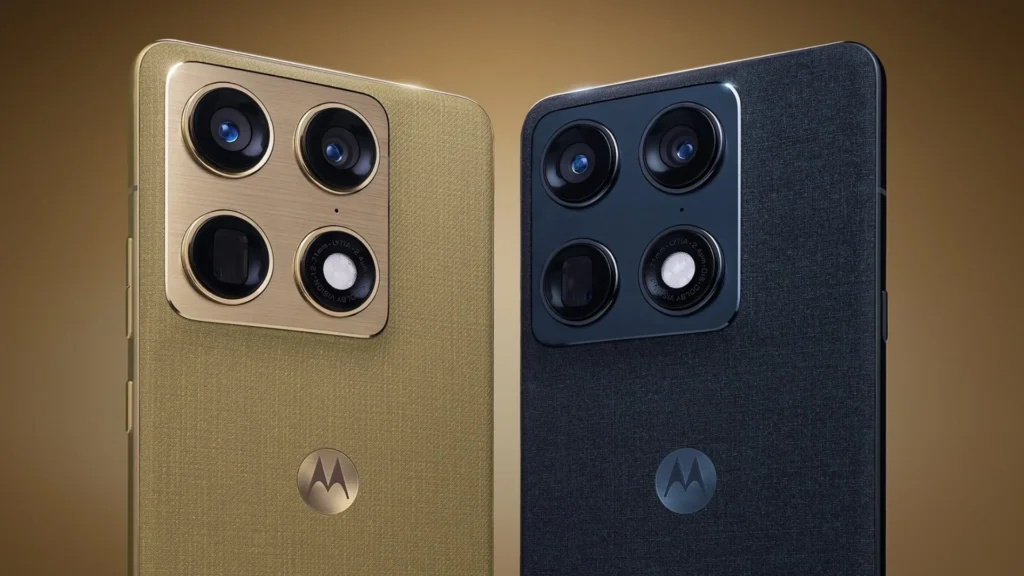
The Motorola Signature features a quad 50MP camera system—something typically seen in premium offerings.
Brands like Oppo and Vivo have pushed camera innovation aggressively, but often at a higher price.
What Motorola does differently is simple:
It delivers comparable hardware without inflating the cost.
Instead of chasing gimmicks, the focus is on consistency:
- High-resolution primary sensor
- Capable ultra-wide
- Functional telephoto
- Balanced image processing
For long-term users, that matters more than experimental features that age poorly.
Build Quality: Flagship Without the Price Tag
Here’s where things get interesting.
The Motorola Signature uses Gorilla Glass Victus 2—the same protection found in ultra-premium phones like:
- Samsung Galaxy S26
- Oppo Find X9
- OnePlus 15
These phones typically cost ₹15,000–₹25,000 more.
So what’s the catch?
There isn’t one.
Motorola is simply undercutting the competition while matching their durability standards.
For someone planning to use a phone for years, this is critical. Better protection = fewer repairs = lower long-term cost.
Software Support: Finally Playing the Long Game
One of the biggest reasons people choose Apple or Samsung is software support.
Motorola used to lag behind here.
Not anymore.
With 7 years of OS updates, the Motorola Signature now matches:
- Samsung Galaxy S series
- Google Pixel series
This changes everything.
A phone is only as good as how long it stays usable. With extended updates:
- Security remains intact
- Features continue to evolve
- Performance optimizations extend lifespan
This single feature alone makes the Motorola Signature a serious long-term contender.
Charging and Battery: No More Waiting
Let’s be honest—charging speed is where brands like Samsung and Google fall behind.
The Motorola Signature offers:
- 90W fast charging
- Larger battery capacity
- Efficient chipset
Compared to:
- Google Pixel 9
- Samsung Galaxy S26
…it charges faster and lasts longer.
For long-term users, this isn’t just convenience—it’s daily quality of life.
Premium Features That Actually Matter
Most phones reserve certain features for their ultra-premium models. Motorola decided to skip that artificial limitation.
The Motorola Signature includes:
1. USB 3.0 Support
A rare feature even in many expensive phones. Faster data transfer, better for professionals.
2. Ultrasonic Fingerprint Sensor
More accurate and faster than optical sensors.
3. IP69 Rating
This is huge.
While most phones (including iPhones and Galaxies) stick to IP68, IP69 offers:
- Better resistance to water pressure
- Improved durability in extreme conditions
That’s real-world reliability—not just marketing.
The Real Value: Longevity Over Flash
Here’s the truth most reviewers won’t tell you:
A phone isn’t judged by how it performs on Day 1—it’s judged by how it performs after 3 years.
And this is where the Motorola Signature stands out.
It combines:
- High-end hardware
- Long software support
- Durable build
- Fast charging
- Balanced performance
Most phones excel in one or two of these areas.
This one covers all of them.
Why It Threatens the Big Players
For the first time in years, Motorola is not just competing—it’s disrupting.
Think about it:
- It undercuts premium phones in price
- Matches or beats them in features
- Offers equal software support
- Avoids major compromises
That puts pressure on:
- Apple (pricing strategy)
- Samsung (charging + value)
- Google (hardware consistency)
And even brands like OnePlus and Xiaomi now face competition in their own “value flagship” space.
The Catch? There Always Is One
No phone is perfect.
Motorola still has a few challenges:
- Brand perception (still seen as midrange by many)
- Camera processing may not match Pixel-level computational photography
- After-sales service network may not be as strong as Samsung or Apple in some regions
But here’s the key point:
These are not deal-breaking flaws.
They’re trade-offs—and relatively small ones compared to what you’re getting.
Who Should Buy the Motorola Signature?
This phone is not for everyone.
If you want:
- Brand prestige → go for Apple
- Best computational photography → go for Google
- Ecosystem lock-in → again, Apple
But if you want:
- Maximum value for money
- A phone that lasts 4–5 years
- No major compromises
- Real-world performance over hype
Then the Motorola Signature becomes one of the smartest choices available.
Final Verdict: The Smart Buyer’s Flagship
The Motorola Signature isn’t trying to be flashy.
It’s trying to be complete.
And in doing so, it achieves something rare—it respects the user’s money.
In a market where most phones push you to upgrade every year, this one is built to stay relevant for years.
So is it the best smartphone for long-term, price-to-longevity users?
Honestly—yes, it’s one of the strongest contenders we’ve seen in years.
Not because it’s revolutionary.
But because it finally gets the basics perfect.

No responses yet